

Capability: Data and Context Engine
The same truck, the same person, one record instead of three.
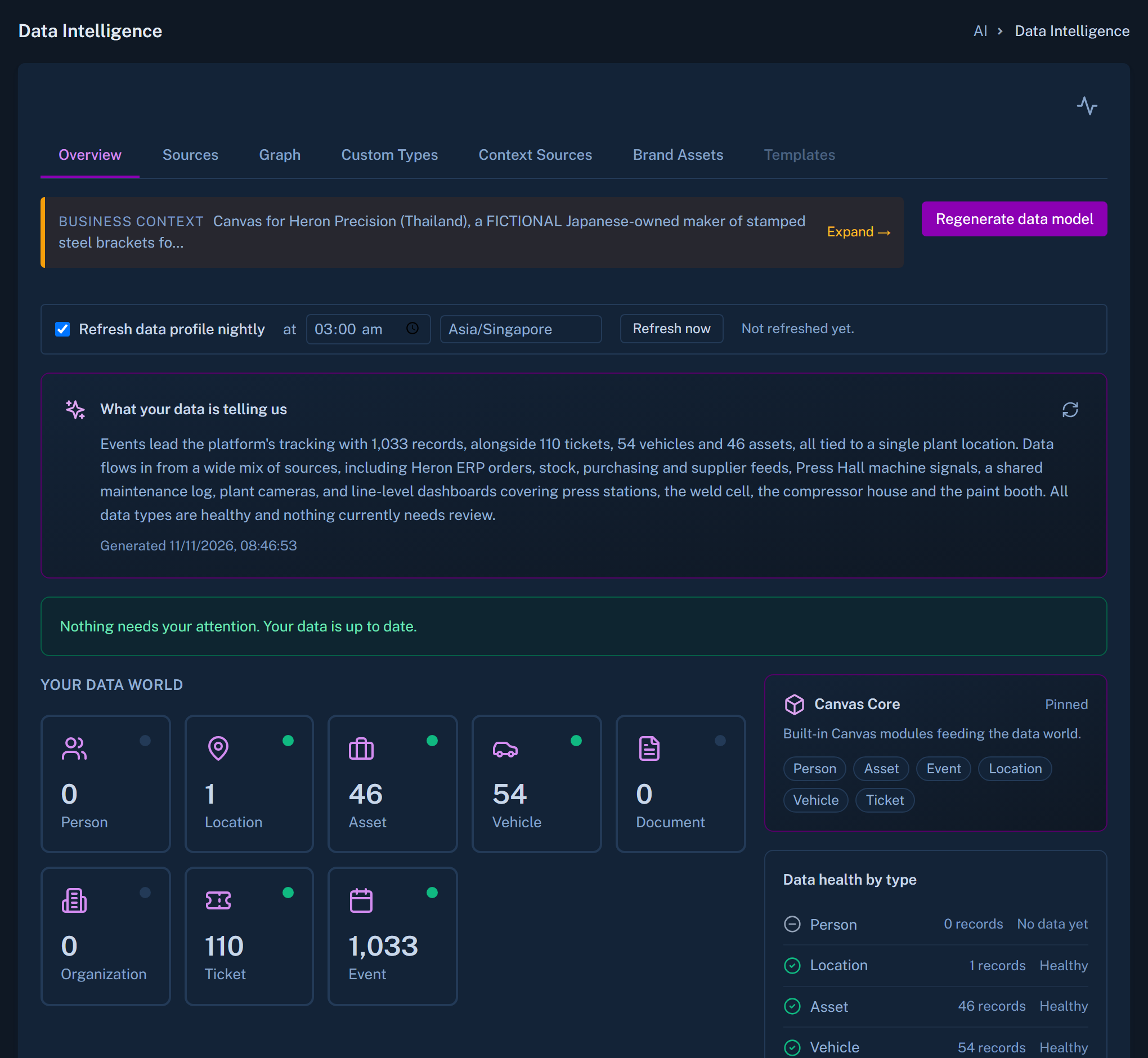
Canvas reads the systems you already run and builds a model in the words your business uses. People stop acting as the glue between the gate log, the badge system and the spreadsheet.
The outcome
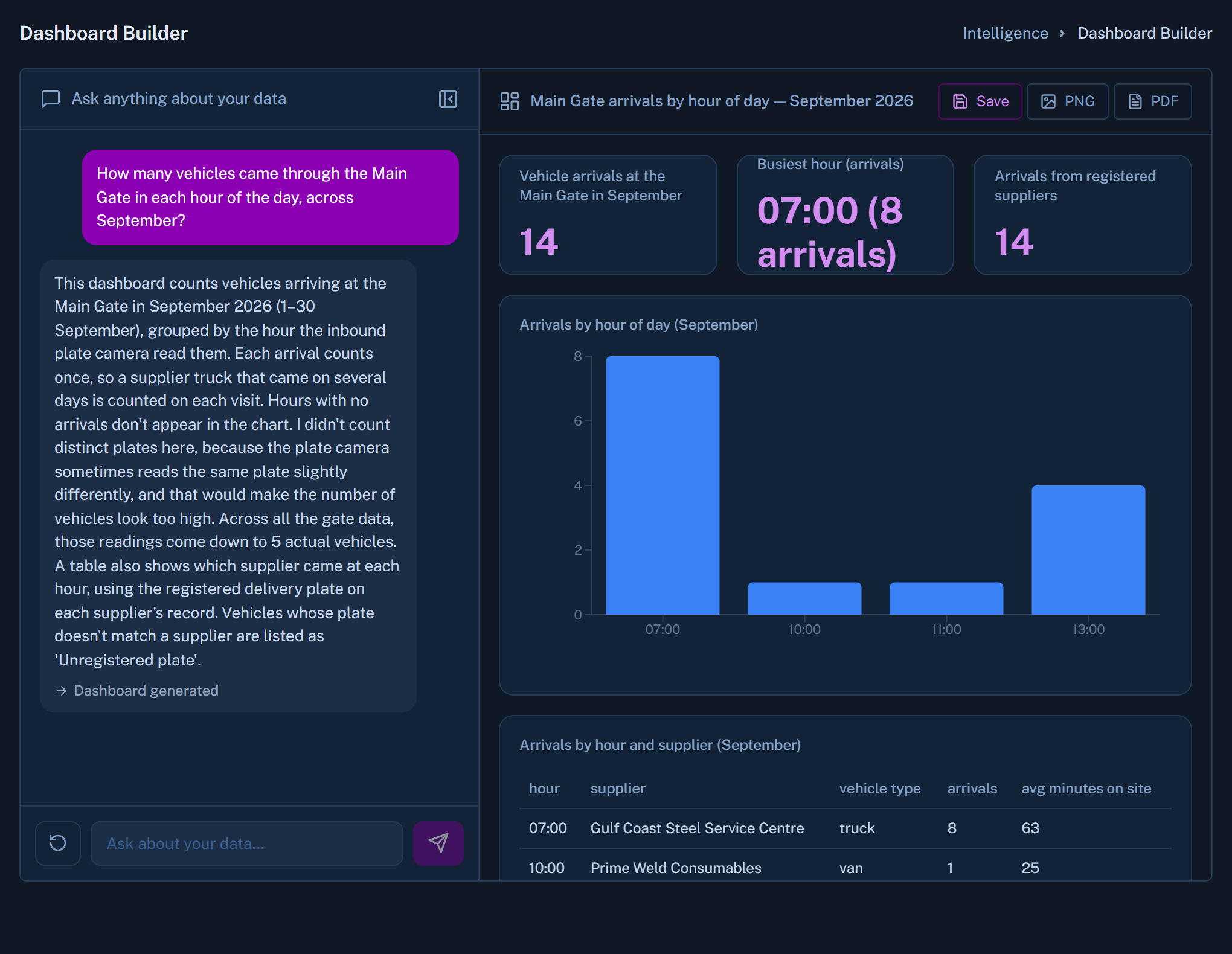
Ask a question in your own vocabulary and get one answer.
Most operations teams already have the data. It sits in separate systems that name the same thing three different ways. Canvas holds a business-level model above them, so a question about a supplier truck or a contractor reads the same wherever the facts came from.
- Built from your own database schema, not a template
- Corrections made by your people are kept when the model is refreshed
- Straight answers inside a domain, with the model behind them
How the model is built
Read, draft, correct, keep.
The first draft is quick. The part that matters is that your corrections survive.
Canvas reads the structure
It looks at the tables and sample rows of a connected system to see what is actually stored.
It drafts the business meaning
Columns become fields people recognise, grouped under record types such as Person, Location, Event, Asset and Vehicle.
Your team corrects it
Rename a field, fix a relationship, say what a status code really means. A person has the last word.
The corrections stay
When the model is refreshed after a system changes, your overrides are not wiped.
One truck, seen by three systems
Each system tells the truth about its own corner. Canvas joins what it can prove belongs together.
| What it records | What Canvas does | |
|---|---|---|
| Plate reader | Plate seen at the gate | Links the vehicle by plate |
| Access control | A badge at the dock door | Links the person across events |
| Face dossiers | An identity event at an entry point | Joins it to the same person record |
Where resolution applies
Honest about scope
Entity resolution is built for two kinds of record. We say so plainly, because it keeps the answers trustworthy.
Persons
The same person is linked across access-control events and face dossiers.
Vehicles
The same vehicle is linked by its plate across the systems that report it.
Everything else
Other record types are modelled and queryable. They are not automatically merged across systems.
Common questions
Do we have to rebuild our data first?
No. Canvas connects to the systems where the data already lives and models it in place. Your teams keep working in the tools they use today.
Who decides what a field means?
Canvas proposes, your people decide. Their overrides are kept.
Where does the data sit?
Inside your perimeter. You hold it and keep it. See data custody.
See your own systems resolved into one picture.
Bring two systems that never agree. We will show you the model Canvas draws from them.